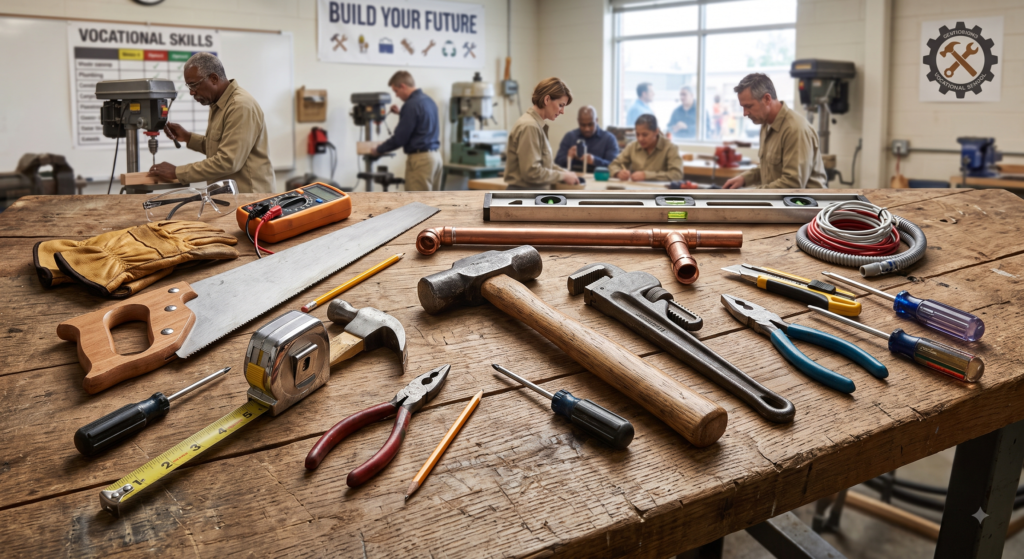
According to the 2026 Jobber Blue-Collar Annual Report, many young adults and career changers are rethinking the value of higher education and considering skilled trades and more affordable certifications. Between high tuition costs and fewer entry-level job openings, college no longer guarantees the opportunities it once did. On top of that, not everyone succeeds in a traditional classroom environment. And not everyone needs to go back to school for a master’s degree to change careers.
Furthermore, not everyone thrives in an office job, especially one where they’re sitting at a desk for eight hours a day. I’ve worked with several clients who preferred opportunities that were hands-on, creative, and immersive, and allowed them to keep moving. They wanted to use their talents to build something from scratch, repair something that was broken, or create beauty out of a simple piece of wood, paper, or clay.
In the mail this week, I received a catalog for a local vocational school. It featured a variety of offerings for skilled trades: apprenticeship programs in carpentry, electrical, and plumbing; trade preparation courses in auto mechanics, auto body repair, and welding; and even a phlebotomy training program in partnership with a local hospital. And this was just one regional school’s offerings!
There was a time when trade schools and vocational programs were not highly regarded. But in today’s job market and higher education landscape, that’s rapidly changing. Job seekers can take advantage of the demand for human-centered, hands-on talent that can’t be automated by AI.
Elyse Pipitone is the owner of Blooming Careers Coaching. She helps job seekers find career opportunities and options they may not have considered, including roles that don’t require returning to college or being stuck in an office. Schedule your free introductory career conversation here: bloomingcareerscoaching/introductory-career-conversation